
Weekly Roundup: December, 2025
Seven stories at the intersection of law, memory, and institutional responsibility.

“Weekly” is subjective, right? Chag Sameach and Merry Christmas—now let’s get into these stories.
1. Germanisches Nationalmuseum returns Nazi-looted objects to heirs of the Lion Brothers.
After completing comprehensive provenance research on five objects, the Germanisches Nationalmuseum in Nuremberg has returned five works to the descendants of German-Jewish art dealers the Lion Brothers. Louis, Hans and Fritz Lion were forced to give up their collection due to pressure from the National Socialist government.
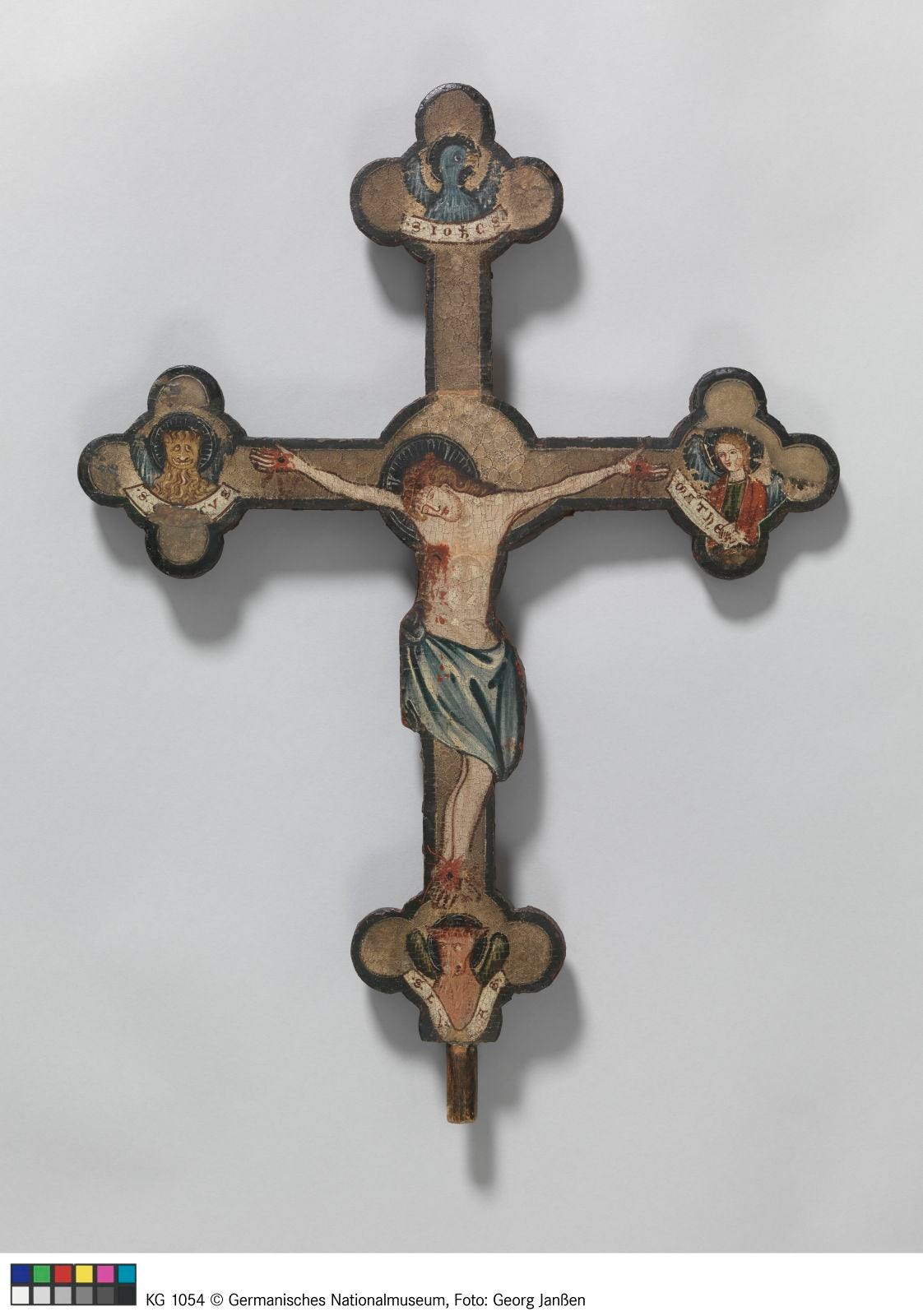
The museum has re-purchased one object at a “fair and reasonable price,” and it will remain accessible to the public at the Germanisches Nationalmuseum. The object is a processional cross created in 1310 near Regensburg; it has art-historical significance due to the unusual presence of a crucified Christ painted on both sides.
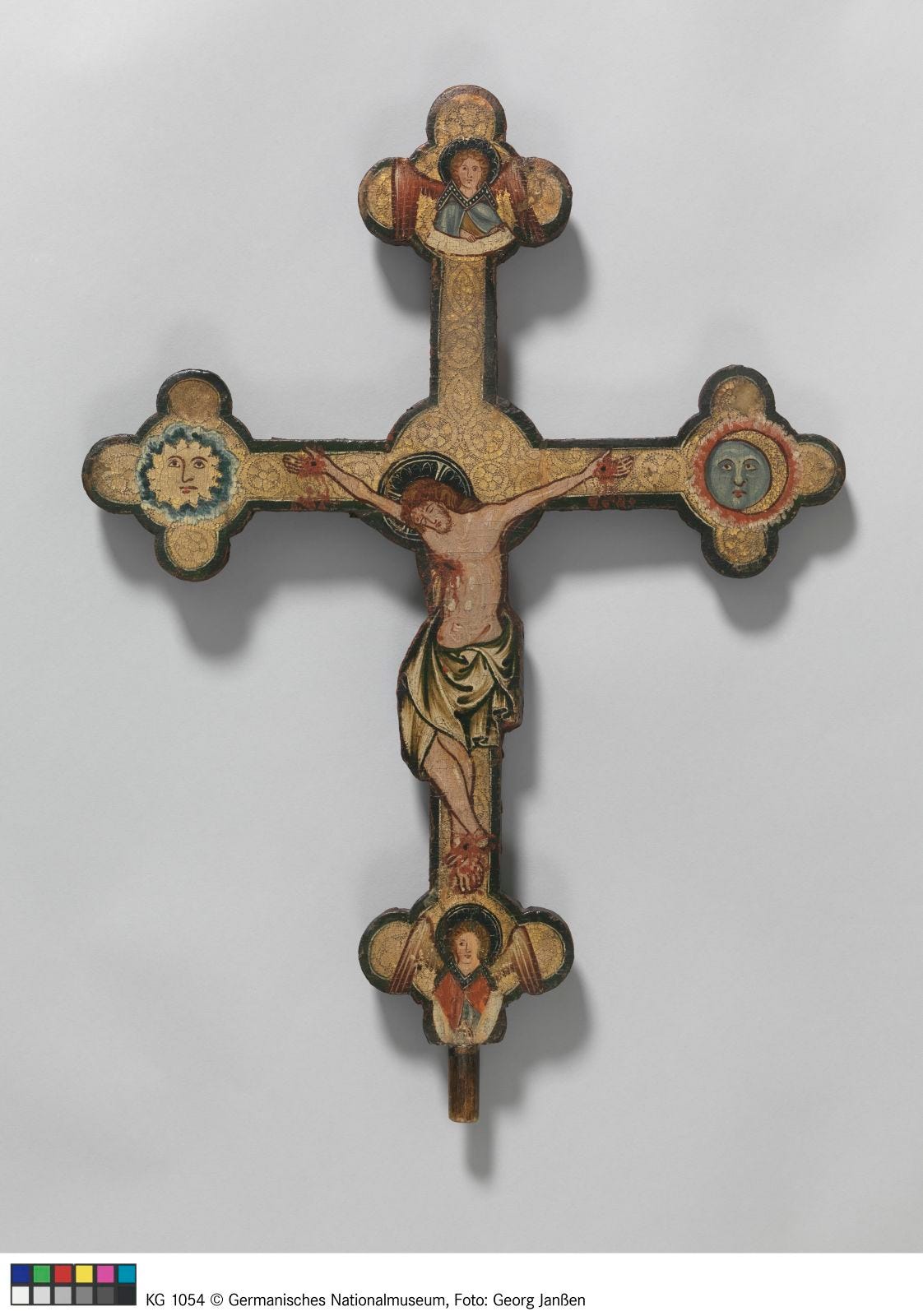
The other objects include an 18th-century gilded vase and a six-paneled screen from the 19th-century. The heirs have praised the restitution process as honoring “the fate of the persecuted Lion brothers and represent[ing] an important act of historical justice in Nuremberg.”
2. Bayerische Staatsgemäldesammlungen in Munich returns painting purchased by Herman Göring in 1941.
The heirs of Ernst Magnus’ restitution claim for The Virgin and Child with Saint Anne (c 1522–1525) was rejected in 2010. However, the newly instituted Court of Arbitration for Nazi-looted Cultural Property reevaluated this decision, and recently approved its restitution.
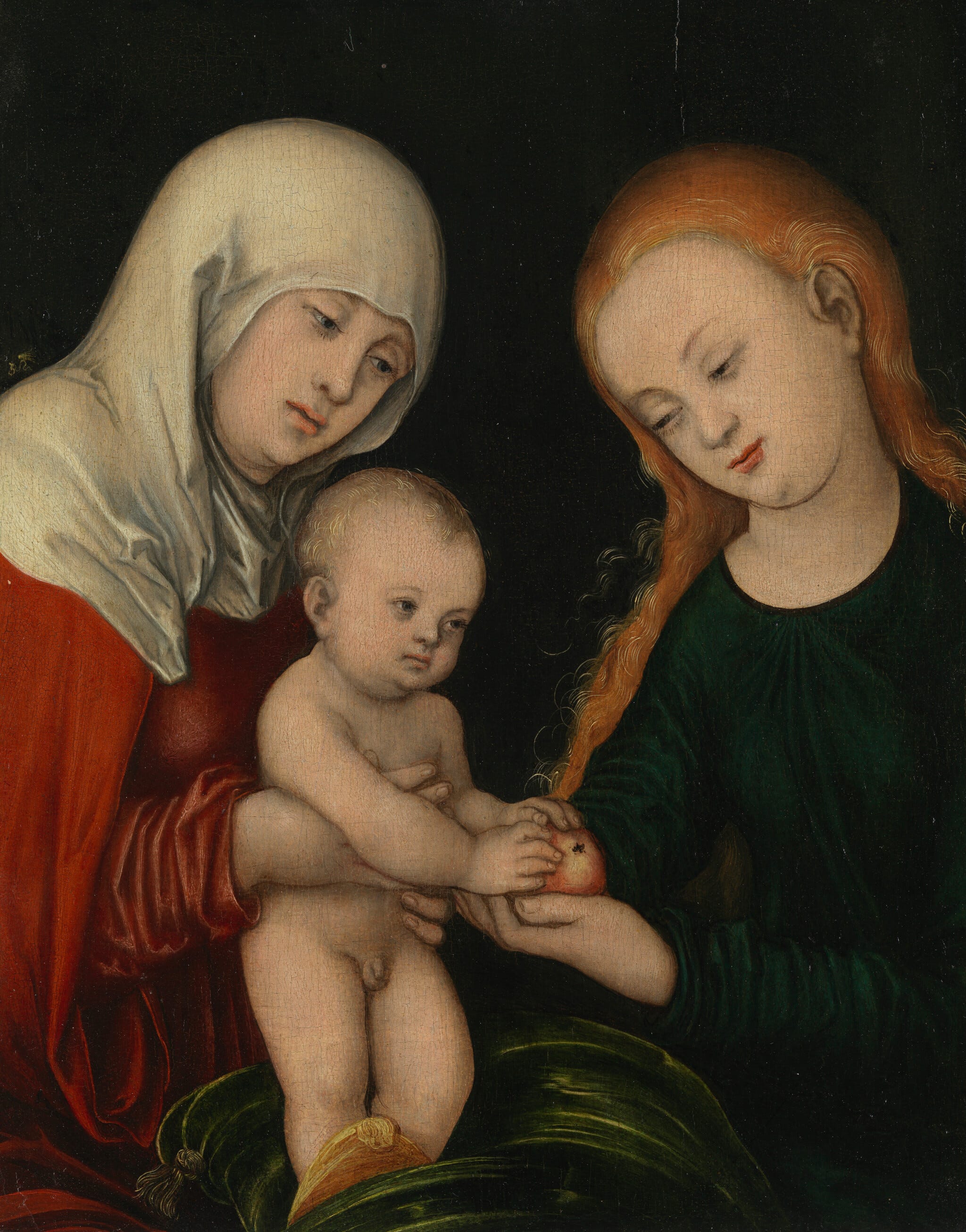
Originally from Hannover, Ernest Magnus fled to Switzerland to escape Nazi persecution. Due to the Jewish Property Levy and the Reich Flight Tax, he was forced to sell additional parts of his collection to fund his family’s visa application to Cuba. He consigned The Virgin and Child with Saint Anne to the Fischer Galerie in Lucerne 1940 and Herman Göring subsequently purchased it in 1941 through the dealer Walter Andreas Hofer. The painting was recovered by Americans at the Munich Central Collecting Point after WWII, and eventually entrusted to the government of Bavaria before being transferred to the Bayerische Staatsgemäldesammlungen in 1961. In 2025, it returns to the Magnus family.
This case highlights the intricacies of conducting Nazi-era provenance research involving “flight assets” (Fluchtgut). Many persecuted people sold their collections in Switzerland due to Nazi pressure both before and during WWII. Yet art sales in Switzerland often fall outside of the scope of legal frameworks designed to address the restitution of Nazi-looted property. Recent innovations in international legal frameworks, including the Court of Arbitration for Nazi-looted Cultural Property, are attempting to address these issues and create a more just system for the restitution and repatriation of Nazi-looted cultural heritage.
3. The Vatical returns 62 objects to indigenous communities in Canada.
The Inuvialuit Regional Corporation (IRC) recently negotiated the return of 62 cultural artifacts to indigenous communities in Canada. These negotiations began under Pope Francis in 2017, and reached their conclusion this month under Pope Leo XIV.
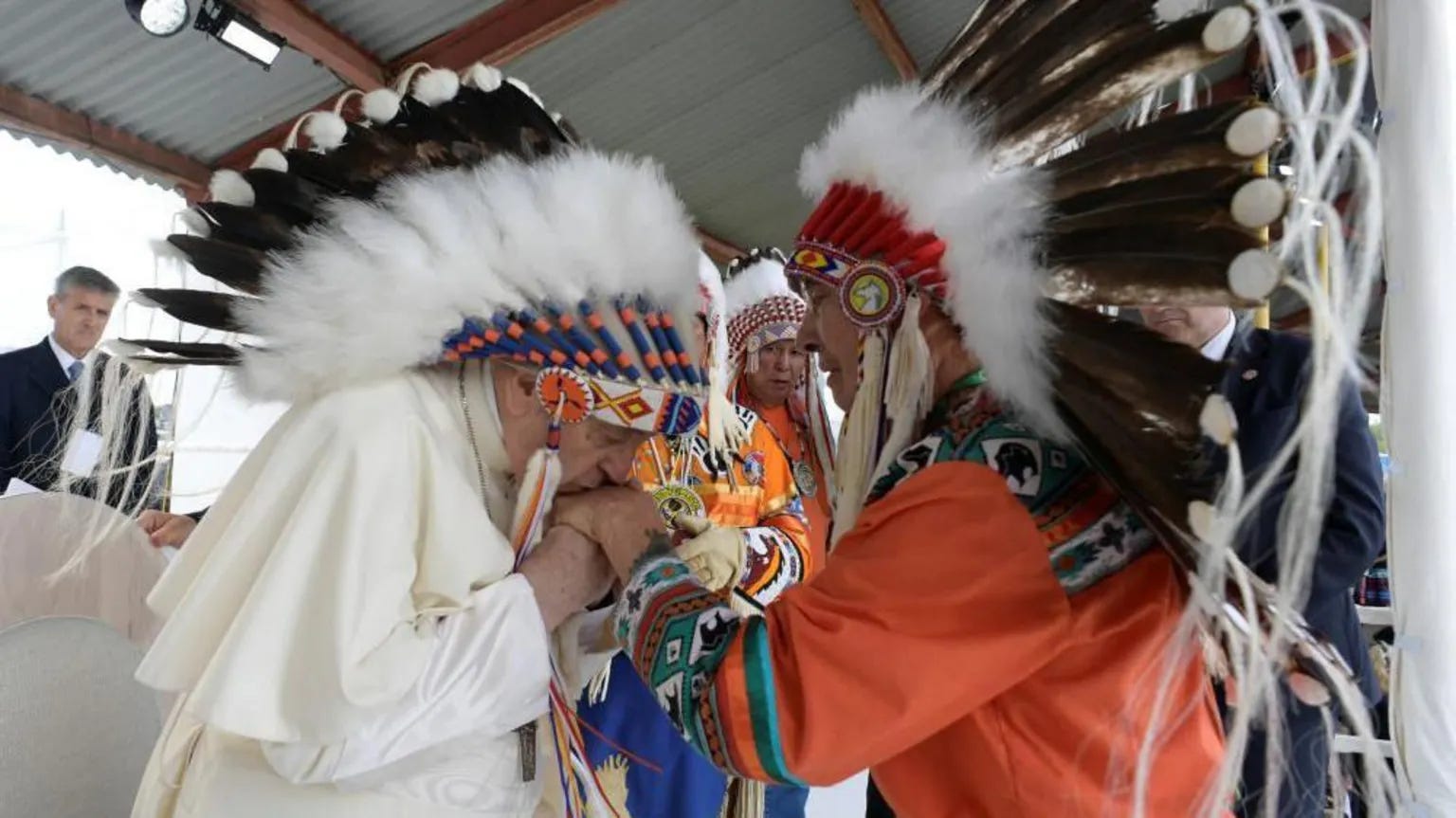
These objects include a rare Inuit sealskin kayak, and a set of embroidered gloves from the Cree Nation.
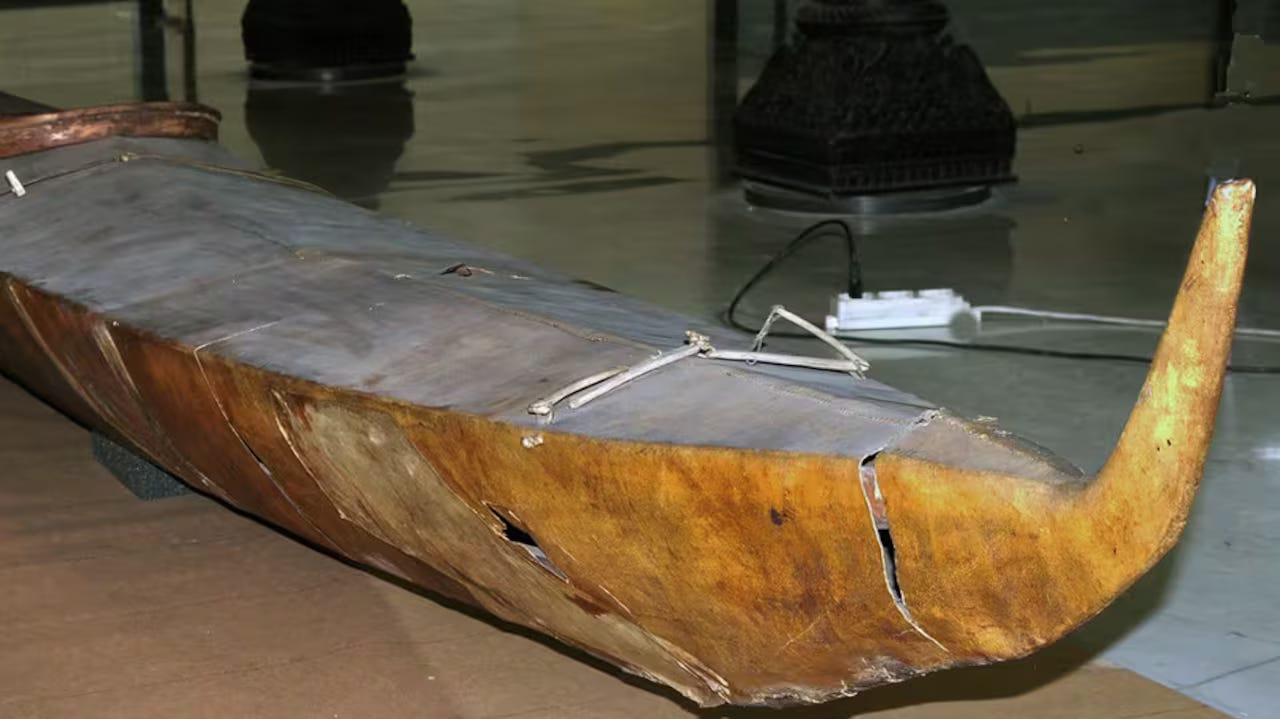
Most of these objects were seized from indigenous communities and removed to Europe in the early 20th Century. At this time, Canadian law and Catholic canon law prohibited the practice of “native spiritual practices” and banned certain ceremonial objects. During this period, indigenous children were also taken from their communities and forced into residential schools, where they experienced abuse, forced conversion, and death.
Originally part of the Vatican Museums’ ethnographic collection, Anima Mundi, Pope Leo XIV gifted the artifacts to the Canadian Conference of Catholic Bishops for immediate transfer to their respective indigenous communities. This gesture is meant to continue the Catholic Church’s reconciliation for the horrors done to indigenous people at residential schools in Canada.
In a joint statement, Pope Leo XIV and the Canadian Conference of Catholic Bishops said they hope this action “represent[s] a concrete sign of dialogue, respect and fraternity.”
4. US Senate unanimously passes the Holocaust Expropriated Art Recovery (HEAR) Act of 2025.
The Holocaust Expropriated Art Recovery (HEAR) Act of 2015 addressed legal barriers in the United States relating to the restitution of property looted or spoliated by the Nazi government, such as state-based statutes of limitations. It is set to expire in 2026, and the US Senate unanimously passed the HEAR Act of 2025 to extend these provisions. The HEAR Act of 2025 now heads to the House of Representatives, where it is expected to pass, and then to the desk of President Trump to sign into law.
The HEAR Act of 2025 strengthens the provisions set out in the 2015 HEAR Act, and clarifies some additional roadblocks. Under the 2015 Act, there is a federal six-year statute of limitations from the date a plaintiff discovers certain aspects of their claim, rather than divergent state-based statutes of limitations that could begin at the time of theft, or the time of discovery. Additionally, this 2025 act eliminates the ‘international comity’ doctrine, which allows US Courts to decline to hear cases involving foreign nationals or foreign legal decisions.
Organizations working to restitute stolen Jewish property, such as the World Jewish Restitution Organization (WJRO) and Art Ashes, have applauded the move saying it will “assist Holocaust survivors and their families who are seeking the return of artwork now held in museums and collections across the United States.”
5. Rothschild family to sell restituted 15th Century mahzor.
A 15th Century mahzor, or prayerbook for the Jewish High Holidays, is set to be sold at Sotheby’s in 2026. It is expected to fetch between $5 and $7 million.
The Rothschild Vienna Mahzor is a parchment manuscripts created in 1415, and contains the prayer services for Rosh Hashanah and Yom Kippur, along with various illuminations throughout. Little is known about its creation and history before Salomon Mayer von Rothschild purchased it in Nuremberg as a gift for his son in 1842.
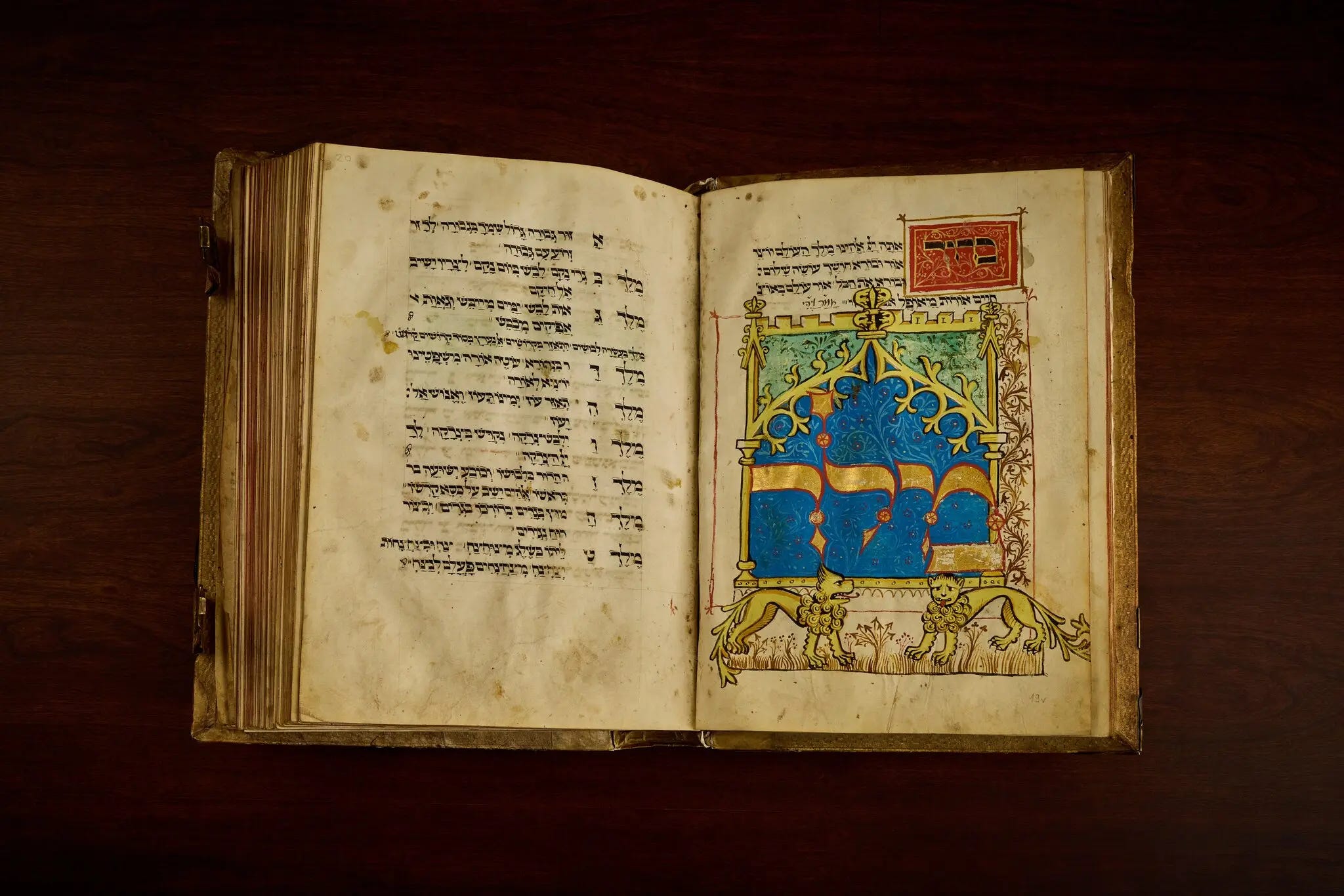
The mahzor remained in the possession of the Austrian branch of the Rothschild family until 1938, when the Nazis forcibly confiscated the collections of the Vienna branch of the family. Soon after the war, the Rothschild family recovered parts of their collection. A change in Austria’s restitution laws in 1999 led to an additional wave of restitutions in the early 2000s. Without bearing any physical signs of its confiscation and unbeknownst to the Rothschild family, the Rothschild Vienna Mahzor remained at the Austrian National Library for decades.
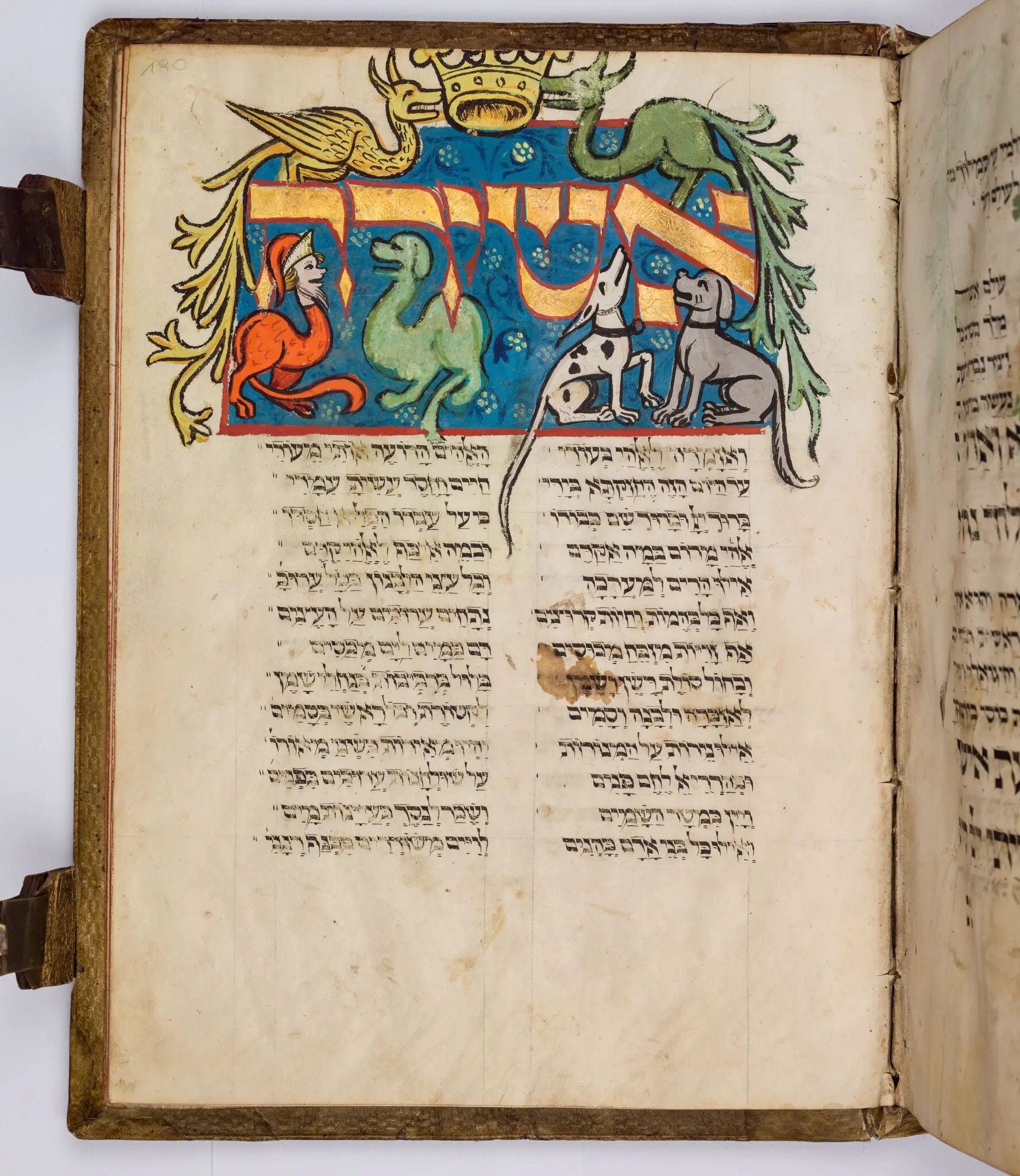
Its existence came to light in 2021, when the Jewish Museum in Vienna mounted an exhibitions called, “The Vienna Rothschilds: A Thriller.” For this exhibition, the Austrian National Library loaned them this mahzor, and the descendants of Alphonse and Clarice Rothschild requested its restitution. Following additional provenance research, the Austrian National Library agreed to voluntarily restitute the book in 2023. It will be actioned by the heirs at Sotheby’s New York on February 5, 2026 and experts hope the buyer will make it accessible to the scholarly community as well as the public.
6. Ukraine publishes list of art looted by Russia from the O. Shovkunenko Kherson Regional Art Gallery in Kherson.
A little over three years ago, Ukrainian forces liberated Kherson from Russian occupation. Since then, heritage professionals have worked to identify the works of art stolen from the O. Shovkunenko Kherson Regional Art Gallery as part of Russia’s strategic attacks on Ukraine’s national and cultural identity.
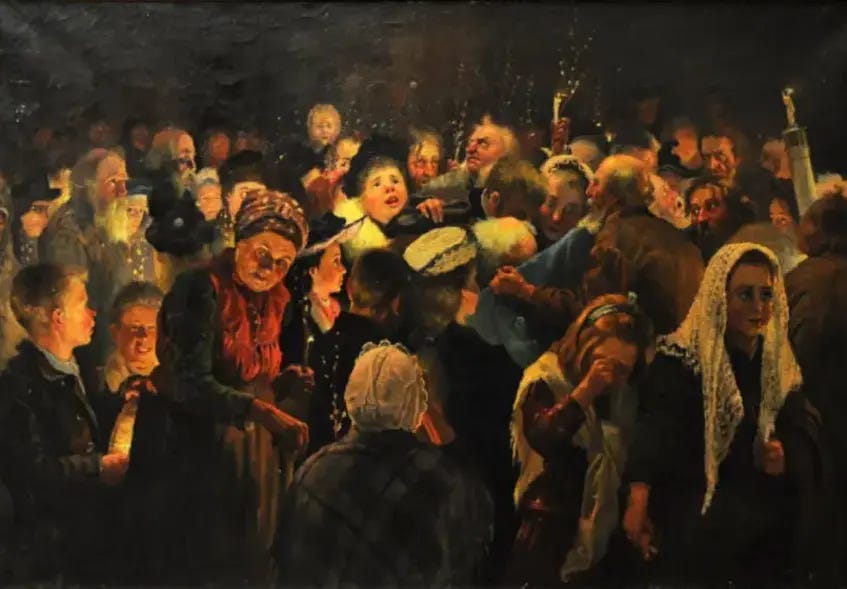
On the third anniversary of Ukraine’s recapture and liberation of the city, the Ukrainian government has published a list of over 1000 objects illegally stolen or destroyed by Russian forces. After their initial theft in 2022, Ukrainian authorities believe they were removed to Crimea. It is unclear where all of the objects are now, though some are at the Simferopol Central Museum of Tavrida.
These objects include sculptures, paintings, drawings, and religious icons. View the complete list of objects stolen from Kherson here.
7. Manhattan DA’s Office announces the return of 43 objects to Turkey.
On December 10, 2025 Manhattan DA Alvin Bragg Jr. announced the return of 43 objects looted from the ancient city of Bubon in modern-day Turkey. This is the most recent repatriation in an ongoing investigation into the systemic plunder of Bubon by an international smuggling network.
These objects include 41 ancient polychrome terracotta relief fragments from the Virginia Museum of Fine Arts, a Byzantine capital with bust of the Archangel Michael (1250-1300) and a marble head of Demosthenes (2nd century CE) from the MET.
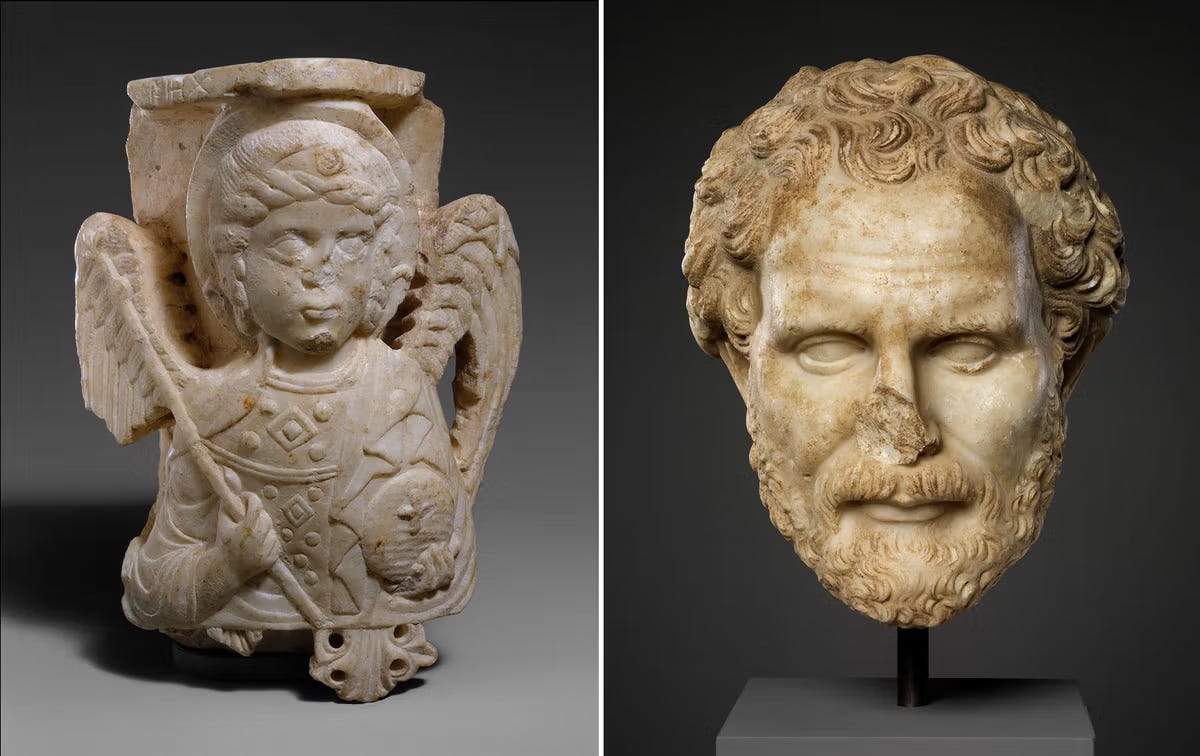
In the 1960s, individuals began looting ancient shrines in and around Bubon and selling these antiquities to traffickers in the Izmir area. Known traffickers George Zakos and Robert Hecht assisted in smuggling these objects out of Turkey via Switzerland and the UK where they were sold to buyers in the US and Europe. Through officials at the Royal-Athena Galleries and the Merrin Gallery, the traffickers were able to craft provenance narratives and launder the objects into the open market, where they ended up in both private and public collections.
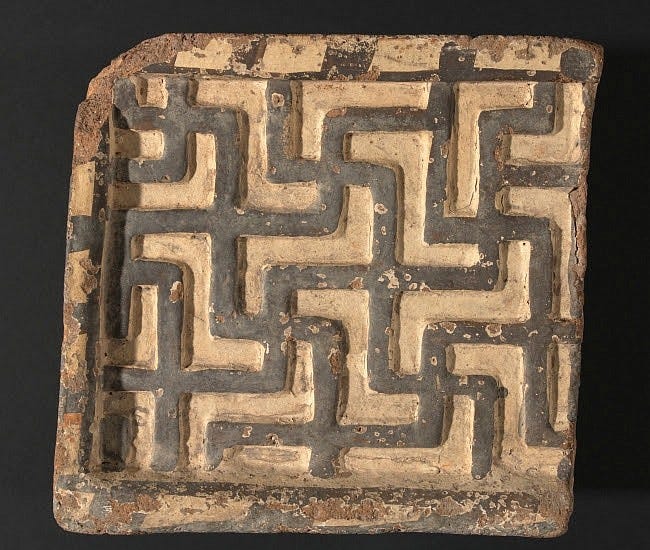
Objects trafficked from Bubon have been exhibited at the Metropolitan Museum of Art (Met), the Cleveland Museum of Art, the Getty Museum, Boston’s Museum of Fine Arts, the Santa Barbara Museum of Art, the Worcester Museum of Art, and the Fordham Museum of Art.
Previous repatriations of objects looted from Bubon occurred in March and September of 2023, 2024, and earlier in 2025.